Microcement on the Central Coast
Sick of grout lines, but not keen on ripping the whole bathroom out?
The short answer: microcement is a thin, hand-trowelled coating, about 2 to 3 mm thick, that turns walls, floors, showers and benchtops into one smooth surface with no grout lines. If your tiles are solid, it can usually go straight over them, so there's no demolition. Modern Effect does microcement across the Central Coast, from our base in Point Clare.
What is microcement, in plain English?
Think of it as a very thin skin of cement, put on by hand, a few layers at a time, then sealed. It looks like polished concrete or soft stone. Because it's so thin, it can go over tiles, concrete, plasterboard or an old benchtop without building anything up.
It comes in almost any colour, from warm white to charcoal. Every wall has a little movement from the trowel. That's the look people are after.
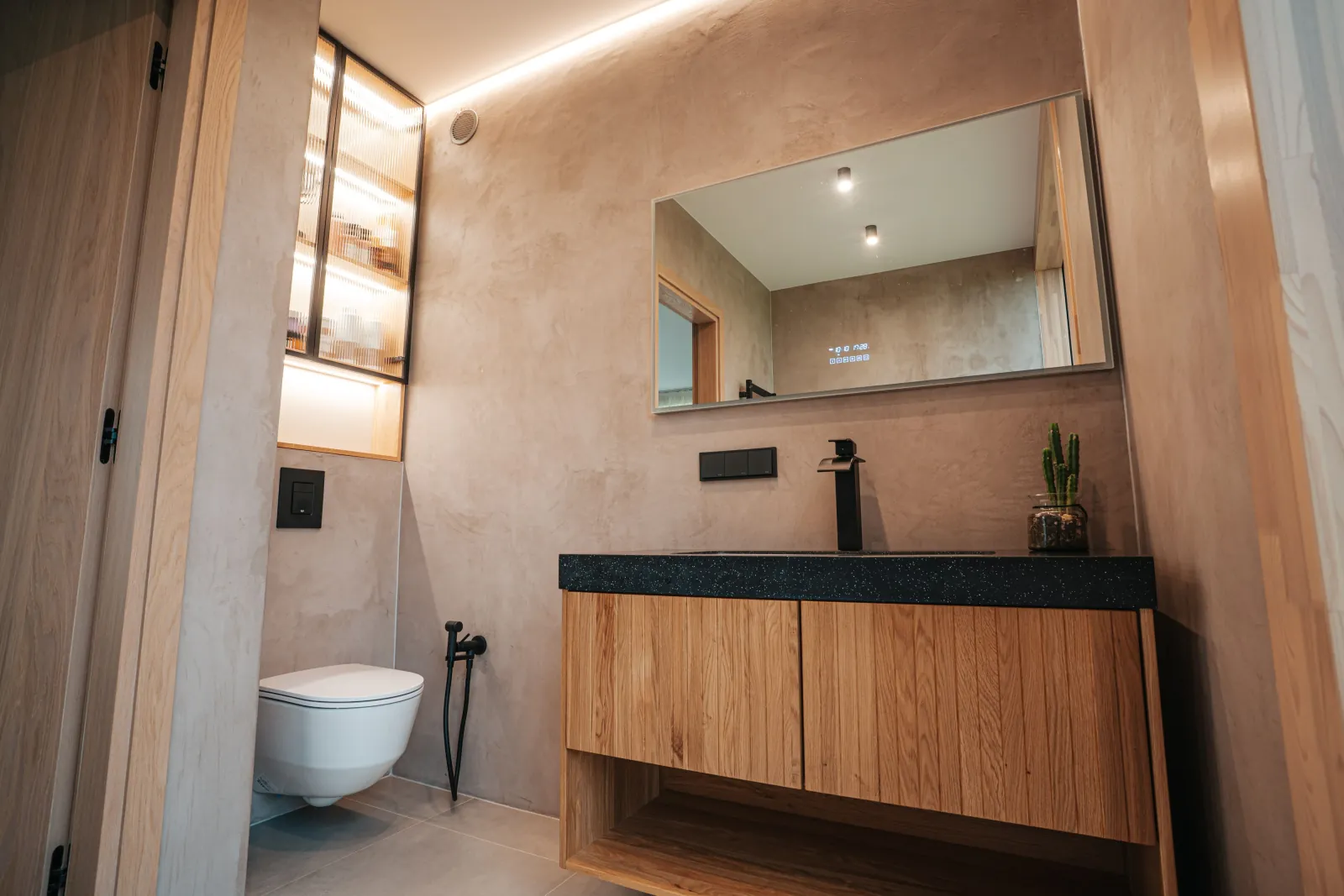
Your bathroom, zone by zone
Most people ask us three things: Can it go in my bathroom? Is it waterproof? What will it cost? The answer is different for each part of the room. Here's the whole picture in one place.
1 Inside the shower: walls and floor
- What it needs underneath: a waterproofing membrane, done to AS 3740. Shower walls are waterproofed to at least 1800 mm high.
- On top: a slip-resistant finish on the floor, and extra sealer coats.
- Published price: about $350 – $550 per m² plus GST. The dearest zone, because of the extra layers.
2 The bathroom floor
- What it needs underneath: a solid base and the right waterproofing for a wet-area floor. No drummy (hollow-sounding) tiles.
- On top: a slip-resistant finish. Ask for its slip rating (a P rating under AS 4586).
- Published price: about $250 – $350 per m² plus GST.
3 Walls outside the shower
- What it needs underneath: solid tiles or a sound wall. No membrane needed for splashes.
- On top: a good sealer, so it wipes clean.
- Published price: about $250 – $350 per m² plus GST.
4 Vanity top or benchtop
- What it needs underneath: a stiff, solid top that doesn't flex.
- On top: extra sealer around the basin and taps, where water sits.
- Published price: about $400 – $600 per m² plus GST. Corners and edges are slow hand work.
Whole bathroom, all walls and floors (about 15 – 25 m²): about $5,000 – $12,000+ plus GST.
Prices: ELF Decor, microcement bathroom price guide, 2026 (Melbourne). These are rough published prices. They aren't Modern Effect's prices and they aren't a quote. Your price depends on the room, the surface and the finish.
One thing to remember: sealed microcement is water-resistant. It isn't the waterproofing. The membrane underneath does that job. So if anyone tells you microcement is "100% waterproof", ask what's going under it. In NSW, residential waterproofing work over $5,000 (labour and materials, including GST) must be done by a licensed contractor (NSW Government: waterproofing work).
Can it go over my tiles?
Usually, yes. If your tiles are stuck down well, the shower drains properly and nothing is leaking, microcement can go straight over them. The grout lines disappear, and you skip the skip bin and the weeks without a bathroom.
If you've got loose tiles, a leak, or water that sits on the shower floor, those get fixed first.
→ Our guide shows you a 10-minute check you can do yourself: Can you put microcement over tiles?
Other places it works
- Floors: living rooms, kitchens and laundries, with a slip-resistant finish.
- Kitchens: splashbacks, benchtops and island fronts.
- Feature walls and fireplaces.
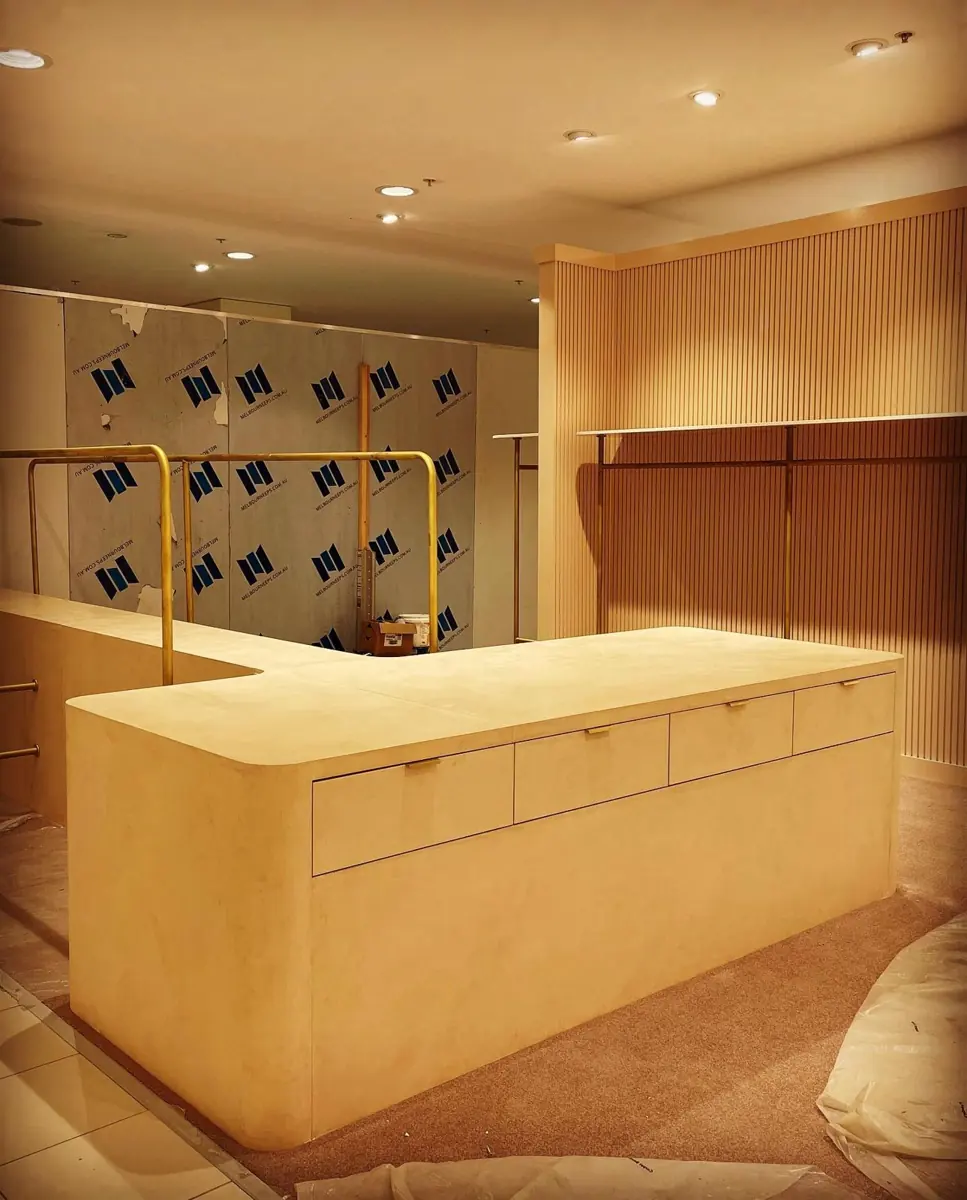
- Shops, cafés and offices: counters, reception desks and walls that need to look good and wipe clean.
How a job runs
Each coat has to dry before the next one goes on, so the work is spread over several days.
- Look and quote. We check the surface, tap the tiles, and agree on colour and finish.
- Repair and prime. Fix loose tiles or cracks, clean off soap scum, then a bonding primer.
- Base coats with mesh. A mesh in the first coat stops cracks at the old tile joins.
- Finish coats. Thin layers for the colour and texture.
- Seal. Two or three coats of sealer.
- Let it cure. The sealer needs time to harden before you use the shower.
A bathroom over tiles usually takes about a week, start to finish. Humid summer weeks can add a day or two.
Why people call Modern Effect
- Local. We're based in Point Clare and work across the Central Coast.
- Rated 5.0 from 16 Google reviews. Read our reviews
- We'll tell you if it's the wrong choice. If your bathroom needs fixing before microcement, or a different finish would suit it better, we'll say so.
Areas we cover
Point Clare, Avoca Beach, Terrigal, Umina Beach, The Entrance, Gosford, Erina, Woy Woy, Kincumber, Wyong, Tuggerah, and the rest of the Central Coast.
We're now also taking jobs in Newcastle, Lake Macquarie and the Hunter.
Common questions
Is microcement expensive?
It costs more per square metre than most tiles, because it's done by hand over several days. Published 2026 prices in Australia are about $250 to $350 per m² plus GST for walls and floors, and more inside a shower. Going over old tiles saves on demolition and waste, which closes the gap.
Can I do microcement myself?
You can buy DIY kits, and they can work on a small feature wall. A bathroom is harder: the timing of each coat, the mesh, the sealer and the waterproofing all have to be right. When a DIY bathroom fails, it usually has to be ground off and started again.
What are the downsides of microcement?
It's only as good as the surface under it. It's skilled hand work. The sealer needs a top-up every few years in busy spots. Floors need a slip-resistant finish. And it won't fix a leak or a shower that doesn't drain.
Can plasterers do microcement?
Some can. It's trowel work, close to plastering and Venetian plaster, but every brand has its own system of primers, mesh and sealers. Ask any installer which system they use, and to see photos of their own microcement jobs, not stock photos.
Is microcement waterproof?
It's water-resistant once sealed, but it isn't a waterproofing membrane. In a shower, the membrane underneath does that job, normally to AS 3740.
Does microcement crack?
It can, if the surface underneath moves or the old tile joins aren't reinforced. Good prep and mesh in the base coat stop most cracking.
How long does a microcement bathroom take?
About a week over existing tiles, including drying and curing time.
How do I clean microcement?
Use a pH-neutral cleaner and a soft cloth. Skip bleach, acids and scourers, because they wear down the sealer.
Related guides: Can you put microcement over tiles? · Microcement bathrooms: pros and cons · How much does Venetian plaster cost? · Venetian plaster on the Central Coast · Wallpaper installation on the Central Coast
Last updated: