Can you put microcement over bathroom tiles?
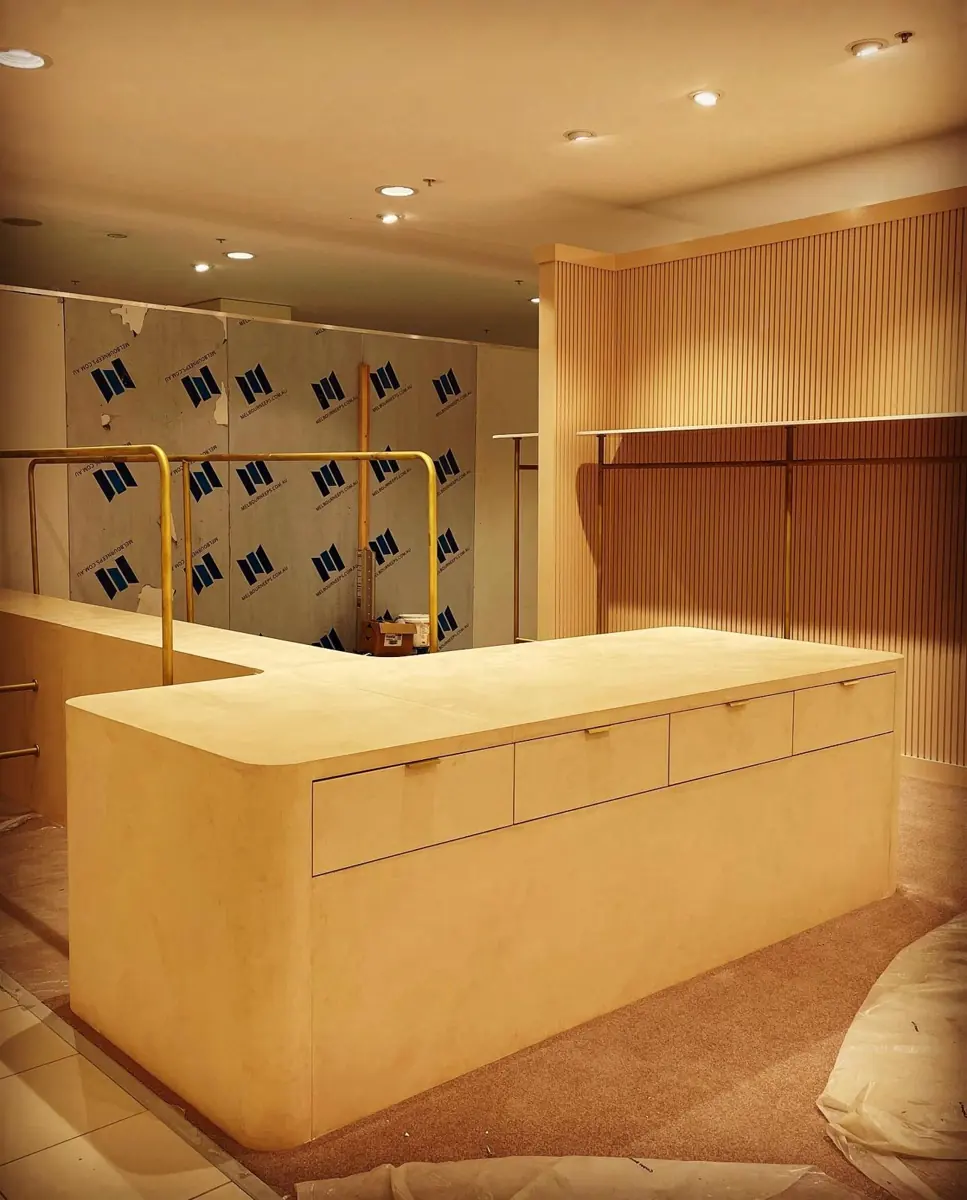
It's a common question. Someone's got a bathroom that works fine but looks like it's stuck in 2005, and they'd rather not rip the whole thing out.
The short answer: yes, most of the time. Microcement can go over existing tiles, as long as the tiles are stuck down properly, the bathroom isn't leaking, and the waterproofing underneath is still doing its job. It goes on about 3 mm thick, sometimes a little more on floors, so you lose the grout lines without the cost and mess of a full reno.
The catch is the word "waterproof". Microcement isn't a waterproofing membrane, and that's where most of the confusion (and a lot of failed jobs) come from. Worth getting your head around before you book anyone in.
When your tiles are a good base
Microcement is only ever as good as what's underneath it. Before quoting, a good installer should check the room properly. Your tiles are usually a good base if:
- They're all firmly stuck down. Tap each tile with a coin or the end of a screwdriver handle. If it sounds hollow (tilers call it "drummy"), it's come away from the wall or floor and needs fixing first.
- There are no cracks running across the tiles. A crack that runs through a few tiles in a line usually means something underneath is moving. Microcement will crack along the same line.
- The surface is fairly flat. Small lips between tiles are fine. They get filled. A floor that dips or rolls needs levelling first.
- There's no sign of a leak. Check for swollen or stained skirting boards, bubbling paint outside the shower, mould along the bottom of the walls, or a water mark on the ceiling of the room below.
Walls are the easy part. Floors and shower bases get walked on and soaked every day, so they need more care with prep, grip and sealing.
When we'd tell you not to do it
If someone says yes without coming out and tapping your tiles, be wary. Microcement over tiles is the wrong call when:
- Lots of tiles are loose. Fixing a few drummy tiles is normal. If half the floor sounds hollow, those tiles need to come up.
- The bathroom is already leaking. A new surface won't fix a membrane that's failed. It just hides the problem while the damage gets worse.
- The structure is moving. Long cracks, a sagging floor or a springy timber subfloor will crack any thin finish, no matter who puts it on.
- Water already pools in the shower. Coating over the top won't change the fall to the drain. If water sits there now, it'll sit there after.
The waterproofing question
You'll see microcement sold as "100% waterproof". Be careful with that one.
Microcement with a good sealer is water-resistant. Water beads up and wipes off, which is why it works so well in bathrooms. But it isn't the waterproofing. In Australia, the waterproofing in a bathroom is its own layer, a membrane underneath the finish, and it's normally done to AS 3740, the Australian Standard for wet-area waterproofing that the National Construction Code refers to.
Most tiled bathrooms already have a membrane under the tiles, at least in the shower and on the floor. In older bathrooms it can be patchy or missing altogether. When microcement goes over sound tiles, the membrane underneath isn't touched. That's exactly why the leak check matters: you're relying on the waterproofing that's already in place.
The shower is where to be most careful. Some microcement systems include a liquid membrane that goes over the tiles before the microcement, especially in the shower recess. Ask your installer which system they use and what they're doing in the shower. If they can't tell you, keep looking.
If new waterproofing is needed, it should be done to AS 3740. In NSW, residential waterproofing work worth more than $5,000 (labour and materials, including GST) has to be done by a licensed contractor.
Five questions to ask before you book anyone:
- How will you check the tiles and the existing waterproofing?
- What are you doing in the shower? Does a membrane go over the tiles, and which product?
- Which microcement system and sealer do you use, and how many coats?
- How do you stop the grout lines showing through?
- How do I clean it, and when will it need resealing?
How it actually goes on
Every brand has its own system, but a proper job over tiles looks much the same:
- Check and repair. Tap test, fix any loose tiles and sort out cracks.
- Clean and degrease. Soap scum and old sealers stop anything sticking.
- Prime. A bonding primer made for tiles and other smooth surfaces.
- Fill the grout lines. Done properly and left to dry, so the lines don't "ghost" through later.
- Base coats with mesh. A reinforcing mesh in the first coat helps stop cracks at the tile joins.
- Finish coats. Thin layers that give you the final colour and texture.
- Seal. Several coats of sealer, which make it water-resistant and easy to wipe down.
Each coat needs time to dry, and the sealer needs time to cure before the shower gets used. Plan on about a week without the bathroom, sometimes longer depending on the sealer. Your installer should tell you when the shower is safe to use. Still a lot less hassle than a full strip-out and re-tile.
What it costs
Every bathroom's different, so we won't pretend to give you a fair price without seeing it. These are the things that push the price up or down:
- How much you're covering. A feature wall, all the walls, the floor, the shower, or the lot.
- The state of the tiles. More repairs means more prep time.
- The fiddly bits. Niches, shelves, window sills, vanity tops and corners all take longer than a flat wall.
- The shower. Extra steps, and possibly a membrane over the tiles.
- The finish. Colour, texture and the number of coats.
Compared with re-tiling, you're saving on demolition, skip bins, new tiles and time without a bathroom. But it's skilled hand work, so it's not always the cheaper option. The only way to know for sure is to get a quote on your room.
Where microcement goes wrong
Nearly every problem comes back to prep, not the product:
- Hairline cracks. Usually movement in the wall or floor, or no mesh over the tile joins.
- Grout lines showing through. The joins weren't filled properly or weren't left to dry.
- Stains and water marks. Not enough sealer, or the wrong sealer for a bathroom.
- A slippery floor. Floors and shower bases need a slip-resistant finish.
- DIY kits. They look easy on YouTube. In a bathroom, getting it wrong usually means grinding it all off and starting again.
Looking after it
Wipe it down with a pH-neutral cleaner and a soft cloth. Skip the bleach, harsh acids and scourers, because they wear the sealer. In a busy family bathroom the sealer will need a top-up coat at some point; ask your installer how often for the product they've used. Looked after, microcement over a solid base will last you a long time.
Is it right for your bathroom?
It's a good fit if your bathroom is solid but dated, it isn't leaking, and you want that seamless look without a full reno. It's not the answer if the tiles are failing, there's a leak, or you want to change the layout.
The easiest way to find out is to show us. Send a few photos (the whole room, the shower and a close-up of the tiles) and we'll give you an honest first opinion. If it looks right, we'll come out and tap-test before we quote. Text them to 0450 353 816 or ask for a free quote. We're based in Point Clare and work right across the Central Coast and Sydney.
Common questions
How thick is microcement over tiles?
About 3 mm all up, sometimes a bit more on floors. Doors are rarely a problem, but floor waste grates, tap cover plates and shower screens may need adjusting or refitting.
Can microcement go on a shower floor?
Yes, with the right system: a solid base, the right waterproofing approach for the shower, a slip-resistant finish and proper sealing.
Does microcement crack?
It can if what's underneath moves or the tile joins aren't reinforced. Good prep and mesh over the joins stop most cracking.
How long does microcement last?
Many years, as long as it goes over a solid base and the sealer is looked after.
Is microcement cheaper than re-tiling?
Sometimes, not always. You skip the demolition, the waste and the new tiles, but it's skilled hand work. The size and condition of your bathroom decide which comes out cheaper.